
How Long Do Veneers Last? Everything You Need to Know
If you’re thinking about getting veneers, one of the first things on your mind is probably how long do veneers last? It’s a fair question — veneers are an investment in your smile, and you want to know what you’re signing up for. The short answer is this: porcelain veneers lifespan ranges from 10 to 20+ years, while composite veneers typically last 5 to 7 years. But that’s just the starting point. How long your veneers last really comes down to the material chosen, how they were placed, and how well you care for them every day. Keep reading — there’s more to know before you decide.
Porcelain Veneers Lifespan vs Composite Veneers Lifespan
Not all veneers are made the same. The material matters a lot.
Porcelain veneers are custom-made ceramic shells bonded to the front of your teeth. They’re strong, stain-resistant, and look incredibly natural. Most patients ask, how long do porcelain veneers last? — and the answer is typically 10 to 20 years, sometimes longer with excellent care. Porcelain is harder and more wear-resistant than composite, which gives it a clear edge in durability.
Composite veneers are made from a tooth-coloured resin applied directly to the tooth in a single visit. They cost less and are quicker to place, but the composite veneers lifespan is shorter — usually 5 to 7 years before they need a touch-up or replacement. The material is more porous, which means it stains more easily over time.
In short: If you want longevity, porcelain is the better choice. If budget or simplicity is the priority, composite is a solid option — just plan for more frequent upkeep.
Are Veneers Permanent? Here’s the Truth
This is one of the most common questions people ask — are veneers permanent?
Veneers themselves are not permanent — they will eventually need replacing. However, the process of getting veneers often is permanent because a small layer of tooth enamel is usually removed to make room for the veneer. Once that enamel is gone, it doesn’t grow back. That’s why it’s so important to choose a skilled, experienced dentist from the start.
So while you won’t have the same veneer forever, your tooth will always need a veneer once you’ve had one placed.
How Often Do Veneers Need Replacing?
How often do veneers need replacing depends on the type and how well they’re maintained.
- Porcelain veneers: every 10 to 20 years on average
- Composite veneers: every 5 to 7 years
Some patients go well past 20 years with porcelain — veneer longevity really does vary person to person. Patients who grind their teeth, bite their nails, or skip regular dental visits tend to need replacements sooner. Those who follow good habits get more years out of their investment.
How to Make Veneers Last Longer
If you want to know how to make veneers last longer, the answer isn’t complicated — but it does require consistency.
Here’s what works:
- Brush twice a day with a soft-bristled toothbrush and non-abrasive toothpaste
- Floss daily to protect the gum line around your veneers
- Wear a nightguard if you clench or grind your teeth — this alone can add years to your veneers
- Avoid biting hard things like ice, pen lids, or fingernails
- Skip stain-heavy foods regularly — coffee, red wine, and dark sauces can still affect composite veneers
- See your dentist every 6 months for professional cleans and check-ups
Caring for veneers isn’t drastically different from caring for natural teeth — it just needs to be done right.
What Do Veneers Look Like After 10 Years?
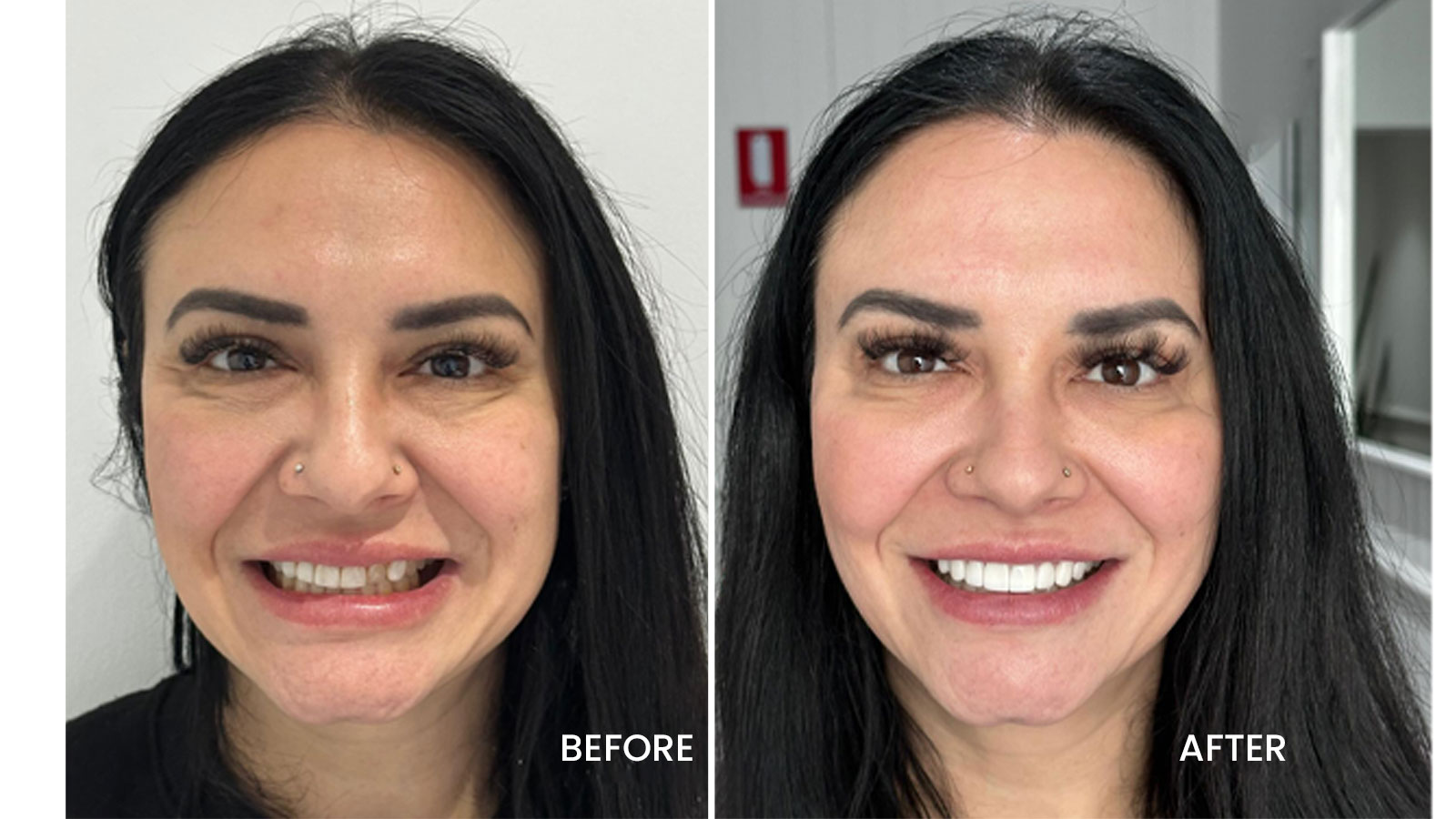
Veneers before and after years later is something many patients search because they want to know if their smile will still look good long-term.
Good news: porcelain veneers after 10 years still look great when properly maintained. Porcelain doesn’t stain the way natural teeth do, and quality veneers hold their shape and colour for well over a decade. Composite veneers, on the other hand, may start to show minor discolouration or wear around the 5-year mark.
The key is starting with high-quality veneers placed by a dentist who knows what they’re doing.
One thing worth checking before getting veneers: your gum health. Veneers placed on unhealthy gums won’t last as long. If you’re unsure, read more about whether you can get veneers with gum disease before booking your consultation.
How Just Smiles Dentistry Can Help
At Just Smiles Dentistry, Dr Nicole Saba and her team have completed over 1,000 porcelain veneers with more than 20 years of clinical experience. Every veneer is carefully planned around your smile, facial structure, and long-term oral health — not just the way it looks on day one.
If you’re exploring veneers in Sydney, we’d love to walk you through your options without pressure. Our approach is built on clarity, precision, and lasting results.
Ready to find out if veneers are right for you? Contact our friendly team today — we’re here to help you take the next step with confidence.
Frequently Asked Questions
- Do veneers last forever?
No — veneers do not last forever. Porcelain veneers typically last 10 to 20 years, and composite veneers last around 5 to 7 years. With excellent care, some porcelain veneers last even longer, but they will eventually need replacing. - Can veneers fall off?
It’s uncommon, but veneers can detach if they weren’t bonded properly, if there’s decay beneath the veneer, or if something puts too much force on the tooth. Regular dental check-ups help catch any early signs of loosening before it becomes a bigger problem. - How durable are veneers day-to-day?
Porcelain veneers are quite durable for normal activities like eating and talking. They’re not designed for extreme force — so avoid using your teeth to open packaging or biting down on very hard foods. Composite veneers are slightly more prone to chipping but are easy to repair. - What happens when veneers need replacing?
Replacing veneers is usually a smooth process. Your dentist removes the old veneer, checks the underlying tooth, and bonds a new one in its place. Most patients find it easier than the original placement. - Is the composite veneers lifespan worth it if they cost less?
It depends on your goals. Composite veneers are a good short-term option and easier to repair. If you want a longer-lasting result with better stain resistance, porcelain is the better investment over time. Your dentist can help you weigh up the options based on your smile and budget.
Your veneers can look beautiful for years — even decades — with the right care and the right dentist. If you’re ready to learn more, the team at Just Smiles is here to guide you every step of the way.
About The Author